Source medical grade food packing bottle for Cosmetics, Medicine, and Supplements
Compare 30 available options for medical grade food packing bottle designed for cosmetics, medicine, and supplements. These HDPE and PET bottles feature screw caps, free samples, and ISO certifications for diverse packaging needs.
Key considerations
Products List




Comprehensive Sourcing Guide
Strategic Sourcing Guide for Medical Grade Food Packing Bottles
Understanding Material Specifications and Physical Attributes
When sourcing medical grade food packing bottles, the primary technical differentiator lies in the polymer composition and physical geometry. The available market data indicates a divergence in material types, with High-Density Polyethylene (HDPE) and Polyethylene Terephthalate (PET) being the most frequently observed materials. HDPE is often cited for its chemical resistance and durability, making it suitable for a broad range of applications including cosmetics, personal care products, food, chemicals, and medicine. Conversely, PET is highlighted in specific contexts such as "Pet Candy Bottle" applications, suggesting a focus on clarity and specific barrier properties required for certain food-grade items.
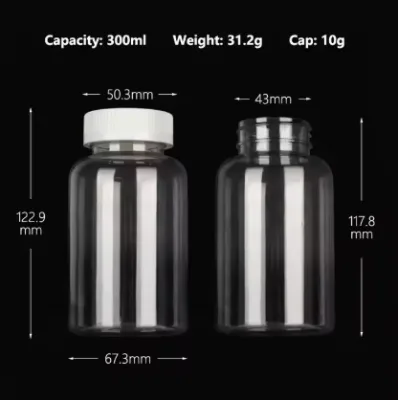
The physical form of these containers is predominantly round, with specific model numbers like MD-765 through MD-768 and MD-176 through MD-746 indicating a wide variety of standardized shapes. The capacity range is extensive, spanning from 50ml up to 950ml, with specific standard sizes noted at 150ml, 200ml, 250ml, and 300ml. This variation allows buyers to select bottles that align precisely with their product volume requirements. A critical physical attribute to verify is the bottle mouth diameter, with specific examples showing a 45mm opening, which dictates the compatibility with various dispensing mechanisms or filling equipment.
Furthermore, the structural design often includes specialized features. Some models are equipped with a "Measuring Cup" as a special feature, adding value for supplements and pharmaceuticals where dosage accuracy is paramount. The shape is generally described as round or shaped, with the "Shaped Bottle" designation implying potential ergonomic or branding-specific contours. The packaging of these goods typically involves standard export cartons, with goods palletized and wrapped for transport, ensuring stability during the logistics chain. Buyers must cross-reference the specific model number with the intended material (HDPE or PET) to ensure the physical properties match the chemical compatibility needs of the product being packaged.
Compliance, Certification, and Regulatory Standards
For medical and food-grade applications, compliance is not merely a preference but a mandatory requirement. The observed product listings frequently reference a suite of certifications including ISO, SGS, FDA, and COA (Certificate of Analysis). These documents serve as the primary evidence of a manufacturer's adherence to quality and safety standards. The presence of ISO and SGS certifications suggests that the manufacturing processes have undergone third-party auditing for quality management systems. The FDA reference indicates that the materials may be compliant with United States Food and Drug Administration regulations for food contact substances, a critical factor for products entering the American market.
However, buyers must exercise caution when interpreting these claims. While the data lists "ISO SGS FDA COA" as available attributes, it does not guarantee that every single SKU or model number carries every specific certification. The distinction between "Certificate: SGS, ISO" and "Certification: ISO SGS FDA COA" suggests variability in the documentation provided for different product lines. Therefore, the procurement strategy must include a direct request for the specific Certificate of Analysis (COA) for the exact batch and model intended for purchase. This document should verify that the specific polymer formulation meets the migration limits and purity standards required for medical and food contact applications.
Additionally, the concept of "Eco-Friendly" and "Recyclable" attributes is present in the product descriptions. While these are positive environmental indicators, they do not automatically confer medical or food-grade status. A bottle may be recyclable but not suitable for pharmaceutical use if the resin purity does not meet pharmacopoeia standards. Buyers should verify that the "Eco-Friendly" claim is backed by specific material composition data rather than general marketing terminology. The "Food Grade Packaging" application listed in the data reinforces the need for materials that do not leach harmful substances, but this must be validated through the supplier's technical data sheets and the aforementioned COA.
Cost Drivers and Pricing Structures
The pricing landscape for medical grade food packing bottles is influenced by several dynamic factors, including material costs, customization levels, and order volume. The observed price range in the market is extremely broad, spanning from $0.01 to $5,000 USD. This wide variance is likely due to the inclusion of different product types, from single unit samples to bulk container shipments, rather than a direct reflection of unit cost for standard bottles. The "Manufacturer Price," "Factory Price," and "Wholesale Price" labels indicate that direct sourcing from the production facility is a primary strategy for cost optimization.
Order Volume is a significant cost driver. The Minimum Order Quantity (MOQ) varies widely, with observed ranges from 1 to 100,000 units, and a specific high-confidence fact noting an MOQ of 10,000 sets for certain configurations. This suggests that economies of scale are substantial; smaller orders may incur a premium per unit, while larger volumes align with the "Factory Price" structure. Buyers should be prepared to negotiate based on their projected annual volume to secure the most favorable pricing tiers.
Customization is another major factor affecting cost. The data confirms that "Customization" and "Customized" options are available. This can include custom colors (noted as "White, Any Regular Colours"), custom shapes, or specific cap configurations. While "Free Sample" and "Free Is Available" samples are offered, the cost of custom tooling or specialized production runs will likely be passed on to the buyer. The "PLC" cap type and "Double Deck Cap" options represent specialized components that may carry higher unit costs compared to standard screw caps. Buyers must balance the need for unique branding or functional requirements against the budget implications of these customizations.
Typical Applications and Functional Requirements
The versatility of these bottles is evident in their listed applications, which span multiple high-stakes industries. The primary usage categories include cosmetics, personal care products, food, chemicals, medicine, and specifically supplements, pharmaceuticals, and herbal supplements. The "Pet Candy Bottle" designation and "Bottle Usging: Pills Tablets Capsules" highlight a strong focus on the nutraceutical and pharmaceutical sectors. In these applications, the bottle must not only contain the product but also protect it from environmental factors such as moisture, light, and oxygen.
The material choice directly influences the application suitability. HDPE is often preferred for its chemical resistance, making it ideal for storing various chemicals and medicines. PET, with its clarity and strength, is frequently chosen for food and candy packaging where visual appeal is important. The "Measuring Cup" feature is particularly relevant for vitamins and supplements, where precise dosing is a consumer requirement. The "Screw Cap" and "Double Deck Cap" options provide different levels of security and tamper evidence, which are critical for pharmaceutical and food safety.
Furthermore, the "Application: Supplement Food Grade Packaging" explicitly links the product to the regulatory framework of food supplements. This implies that the bottle must maintain the integrity of the contents over time, preventing contamination or degradation. The "Round Bottle" shape is standard for these applications due to its structural efficiency and ease of filling on automated lines. Buyers should ensure that the selected bottle model supports the specific filling equipment and capping mechanisms used in their production facility, particularly regarding the mouth diameter and cap thread compatibility.
Supplier Evaluation and Operational Logistics
Evaluating a supplier for medical grade food packing bottles requires a rigorous assessment of their operational capabilities and logistical reliability. The data indicates that the "Company" type is a "Manufactuer," suggesting a direct relationship with the production line, which can offer better quality control and pricing than trading companies. The origin of the goods is listed as "China," a major hub for plastic packaging manufacturing. Buyers should verify the specific factory location and capacity to ensure they can meet demand without supply chain disruptions.
Logistics and delivery terms are critical components of the procurement process. The available delivery terms include EXW (Ex Works), FOB (Free on Board), CIF (Cost, Insurance, and Freight), CNF (Cost and Freight), and DDU (Delivered Duty Unpaid). These terms define the point at which risk and cost transfer from the seller to the buyer. For international buyers, FOB or CIF terms are often preferred to manage shipping and insurance responsibilities. The transportation methods listed are "by Sea" and "by Air," with sea freight being the standard for bulk orders due to cost efficiency, while air freight may be necessary for urgent, smaller shipments.
Lead time is another operational factor to consider. The observed lead time is noted as "20-25 days," which provides a baseline for production scheduling. However, this duration can fluctuate based on order complexity, customization requirements, and raw material availability. The "Pallet: Goods Go on Pallet and Wrap" detail indicates that the supplier has standard procedures for securing goods for export, which reduces the risk of damage during transit. Buyers should confirm that the palletization and wrapping standards meet their specific destination port requirements and that the "Standard Export Carton" packaging is robust enough to protect the bottles during long-haul shipping.
Quality Control and Long-Term Procurement Strategy
Maintaining consistent quality in medical grade food packing bottles requires a proactive quality control (QC) strategy. The presence of "ISO SGS FDA COA" certifications is a positive indicator, but it should be complemented by a robust incoming inspection protocol. Buyers should request detailed test reports for each batch, verifying parameters such as wall thickness, dimensional accuracy, and chemical resistance. The "Weight: 25g" specification for certain models provides a benchmark for consistency; deviations from this weight could indicate issues with material density or molding processes.
Long-term procurement considerations involve building a sustainable relationship with the supplier. The availability of "Free Sample" and "Free Is Available" samples allows buyers to conduct preliminary testing without significant financial risk. It is advisable to order samples of the specific model and material combination intended for production to verify fit, function, and compatibility with the product. Over time, establishing a clear communication channel regarding quality issues and supply chain updates is essential. The "Customization" capability of the supplier offers flexibility for future product line expansions or rebranding efforts, making a reliable manufacturing partner more valuable than a low-cost, rigid supplier.
Buyers should also monitor the "Recyclable" and "Eco-Friendly" attributes as part of their corporate sustainability goals. While these claims are present in the product data, verifying the actual recyclability rates and the supplier's environmental management systems will ensure that these claims align with the buyer's sustainability commitments. Finally, maintaining a buffer stock or understanding the "Leadtime: 20-25days" constraint is crucial for inventory management, preventing stockouts that could disrupt production in the medical or food sectors where continuity is paramount. By integrating these technical, regulatory, and logistical factors, buyers can effectively navigate the complex landscape of sourcing medical grade food packing bottles.
FAQs
What certifications are available for medical grade food packing bottles?
Available certifications include ISO, SGS, FDA, and COA. These documents verify adherence to quality and safety standards for food and medical contact, though specific batches require direct verification of the Certificate of Analysis.
Can I get free samples of medical grade food packing bottles?
Free samples are available for many product configurations. Buyers can request these to test material compatibility and functionality before committing to larger orders, though customization costs may apply separately.
Which materials are used for medical grade food packing bottles?
Bottles are primarily manufactured from HDPE and PET materials. HDPE offers chemical resistance for medicines and chemicals, while PET is often used for food and candy packaging due to its clarity and strength.
What is the typical lead time for medical grade food packing bottles?
The standard lead time is 20 to 25 days for production. This duration may vary based on order complexity, customization requirements, and the specific model number selected for the purchase.
How are medical grade food packing bottles packaged for shipping?
Goods are typically packed in standard export cartons and placed on pallets. The pallets are wrapped to ensure stability during transport, with options for sea or air freight depending on urgency.
What is the minimum order quantity for medical grade food packing bottles?
The minimum order quantity can range from 1 to 100,000 units depending on the supplier. Some specific configurations require a minimum of 10,000 sets, while others may accommodate smaller trial orders.
Can medical grade food packing bottles be customized for specific needs?
Yes, customization is available for colors, shapes, and cap types. Buyers can request specific features like measuring cups or double deck caps, though these customizations may affect the final unit price.